
324
“Nanotechnology in nature is not new—it is perfected. We are just beginning to understand it.”
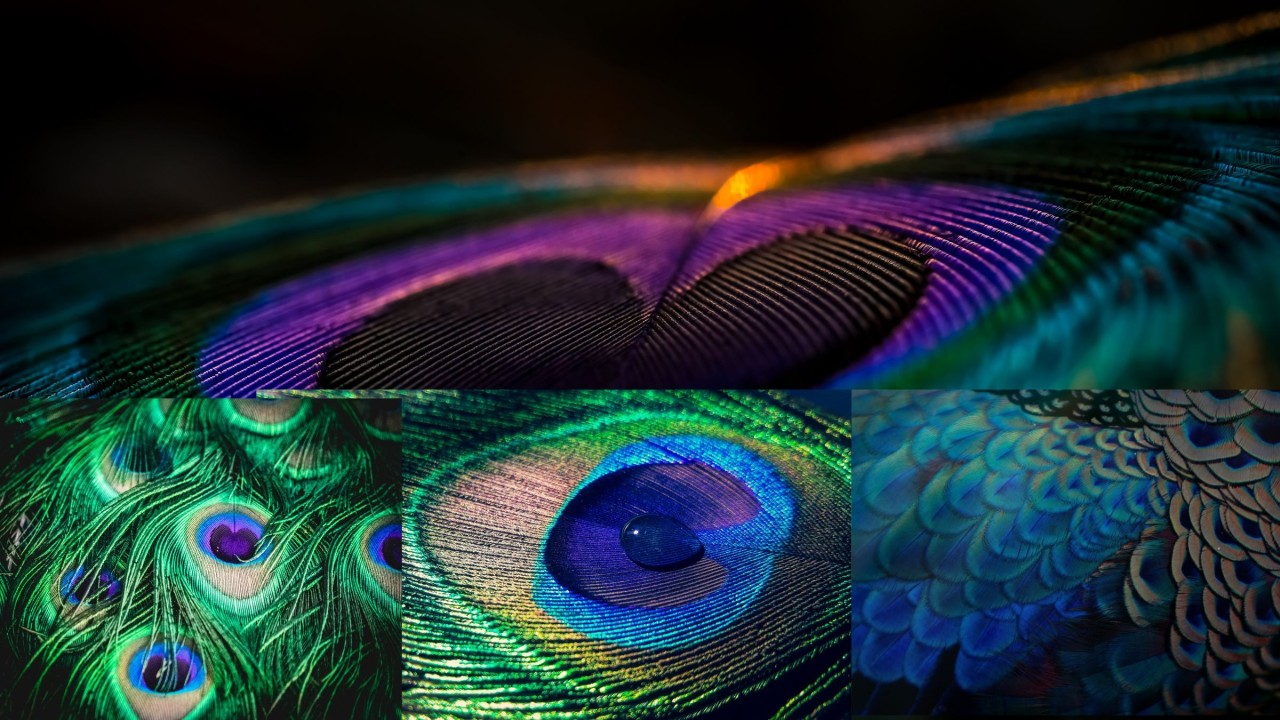
In the heart of a peacock’s feather lies a phenomenon that science is only beginning to replicate: structural color. Unlike chemical pigments that absorb and reflect specific wavelengths of light, structural colors emerge from the physical arrangement of nanoscale structures—offering vibrant hues without toxicity or degradation. This intersection of biology and nanoscience is guiding a wave of technological innovation, where sustainability, longevity, and brilliance are no longer mutually exclusive.
Understanding the Science: Structural Color Beyond Pigments
Most everyday colors are derived from pigments—chemical substances that absorb certain wavelengths of light and reflect others. However, the iridescent blue and green of a peacock’s feathers come not from any dye or pigment, but from the arrangement of nanostructures known as photonic crystals.
These structures are composed of microscopic layers of melanin rods and air gaps that interact with incoming light. The spacing and symmetry of these nanostructures cause constructive interference, amplifying specific wavelengths of light while cancelling others. The result is a vibrant, angle-dependent color far more luminous than conventional dyes.
Natural Design: Inspiration from the Peacock, Butterfly, and Tarantula
Nature’s use of nanotechnology is widespread and highly refined. Beyond peacocks, butterflies and even certain species of spiders—such as the blue tarantula—exhibit similar structural coloration. What makes the blue tarantula especially remarkable is its ability to maintain vivid coloration regardless of the viewing angle—a property that has historically challenged synthetic replications of structural colors.
Scientists have reverse-engineered these biological systems to develop flower-like nanostructures that mimic the tarantula’s effect. These synthetic materials now achieve color stability across a 160-degree viewing angle, the widest known for any artificial structural color to date. This breakthrough enables the integration of vibrant, consistent colors into real-world applications.
The Industrial Implications: From Fashion to Packaging
The capacity to engineer structural colors opens up radical new possibilities across multiple sectors:
Textiles and Apparel: Clothes that never fade, eliminating the need for chemical dyes and repeated coloration processes.
Cosmetics and Personal Care: Non-toxic pigments for skin-safe, long-lasting makeup formulations.
Sustainable Packaging: Vivid, durable colors that require no lamination, ink, or chemical coating.
Security and Authentication: Anti-counterfeiting materials that change color under different lighting or polarization.
Structural colors are not just vibrant—they are non-toxic, biodegradable, UV-resistant, and chemically inert, offering a superior alternative to synthetic dyes that often rely on heavy metals or petrochemicals.
Technological Convergence: Nano-3D Printing and Simulation
With the advancement of nano-3D printing, molecular self-assembly, and computational modeling, researchers are now able to manipulate structural color at an unprecedented level of control. These tools allow for the precise design of bio-inspired nanostructures, enabling customized coloration for any application without the need for traditional dyes.
This biomimetic approach not only reduces environmental impact but also elevates product performance, durability, and aesthetic value.
Scientific and Environmental Relevance
The significance of structural colors extends beyond aesthetic appeal. They represent a paradigm shift in materials science, with implications for:
Environmental Safety: Reduction in toxic waste from dye production and disposal.
Energy Efficiency: Lower temperatures and energy use in manufacturing processes.
Durability and Lifespan: Enhanced stability against heat, humidity, and light exposure.
Structural color is a zero-emission coloration technique that aligns with the goals of sustainable development and circular economy models.
Conclusion: The Future is Naturally Nano
Nature has been engineering nanotechnology for millions of years—through feathers, wings, shells, and scales. As we deepen our understanding of these phenomena, we uncover solutions that are not only beautiful but essential for a sustainable future.
The next generation of color technologies will not come from chemical labs but from the careful study and emulation of nature’s blueprints. From fashion to electronics, from packaging to aerospace, structural nanotechnology stands at the frontier of green innovation and intelligent design.
As we move toward a future where color is crafted, not coated, nanotechnology will redefine how we see and interact with the material world.
For more on biomimicry, structural coloration, and nano-driven innovation, stay connected with the Nano Help initiative.