
327
A groundbreaking study from the University of Cambridge, recently published in Nature Nanotechnology, is offering a fresh perspective on the inner workings of solar materials that could lead to a new era of high-performance, low-cost solar cells.
The research, conducted by a team from the Department of Chemical Engineering and Biotechnology (CEB), sheds light on the role of dynamic nanodomains within lead halide perovskites, a class of materials that has taken center stage in the solar cell revolution.
The study—led by Milos Dubajic and Professor Sam Stranks of the Optoelectronic Materials and Device Spectroscopy Group—was developed in collaboration with top institutions worldwide, including Imperial College London, UNSW Sydney, Colorado State University, and leading synchrotron facilities across Australia, the UK, and Germany.
📰 Read the full news article on Phys.org: Nanodomains hold the key to next-generation solar cells, researchers find
Unlocking the Power of Nanodomains
The research team discovered that tiny, fluctuating nanostructures—referred to as nanodomains—play a critical role in determining how efficiently perovskites absorb sunlight and convert it into electricity. These nanodomains directly affect how electrons are energized and transported across the material.
Previously, the behavior of these structures had not been clearly understood. Now, this new study reveals that by understanding and controlling these dynamic domains, engineers can design perovskite solar cells that are more stable, longer-lasting, and significantly more efficient.
“By understanding the dynamic nature of these nanodomains, we can potentially control their behavior to improve the performance of solar cells and other optoelectronic devices,” said lead author Milos Dubajic. “This could help push the boundaries of energy conversion efficiency.”
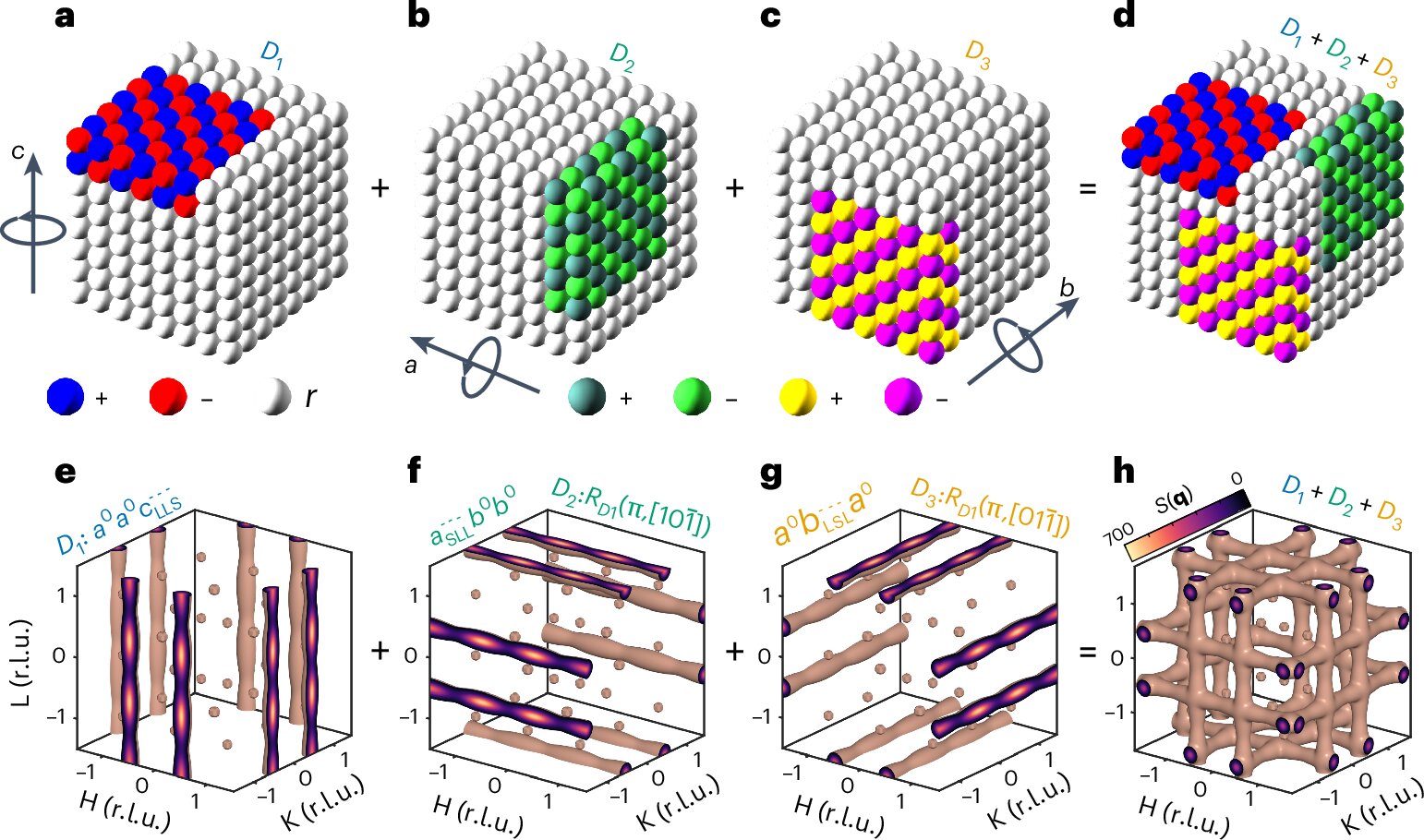
A novel phenomenological X-ray diffuse scattering model used in the study revealed three distinct types of locally tilted octahedral nanodomains in cubic MAPbBr₃ perovskites—an important advancement in the fundamental understanding of these materials.
A Step Closer to Renewable Energy Breakthroughs
Professor Sam Stranks, Principal Investigator of the study, emphasized the broader implications:
“This research brings us closer to understanding the intricate nanoscale structure of these materials. By unlocking the secrets of dynamic nanodomains, we can accelerate the development of perovskite-based solar technologies and make them a more viable solution for the global transition to renewable energy.”
This study builds on the group’s wider mission of developing cutting-edge, sustainable energy solutions through advanced material science. By diving deeper into the nanoscale behavior of materials like lead halide perovskites, the team aims to address urgent global challenges in solar power and clean energy.
📚 More Information
Published in: Nature Nanotechnology (2025)
Title: Dynamic nanodomains dictate macroscopic properties in lead halide perovskites
DOI: 10.1038/s41565-025-01917-0
Credit: Department of Chemical Engineering and Biotechnology, University of Cambridge
Featured on the cover of Nature Nanotechnology (June 2025 Edition)
You Might Be Interested In
- Exploring the Nanotechnology Clothing Market: Trends, Segmentation, and Future Growth Forecast (2025–2029)
- Nanoengineered Niclosamide: A Promising Therapeutic Strategy for Long COVID Management
- New NIST Nanopore Test Detects Radiation Damage in Minutes
- Dual-Scale Ordering: The Key to Strong and Ductile Metals at Cryogenic Temperatures