Imagine asking a computer to invent a material that has never existed before. You specify the desired properties:
• High electrical conductivity
• Low manufacturing cost
• Excellent thermal stability
• Lightweight yet mechanically strong
• Environmentally sustainable
• Suitable for next-generation batteries or quantum computers
Instead of spending years synthesizing hundreds of samples, the computer proposes several promising crystal structures within minutes. Only a few years ago, this idea belonged to science fiction. Today, it is becoming reality.
Artificial intelligence (AI) is rapidly transforming the way scientists discover, design, synthesize, and characterize nanomaterials. Rather than replacing researchers, AI augments human expertise by identifying hidden relationships within vast scientific datasets, predicting material properties before laboratory experiments begin, and guiding experiments toward the most promising candidates.
For decades, progress in materials science and nanotechnology has relied on a combination of scientific intuition, experimental trial and error, and computational modelling. This approach has produced remarkable breakthroughs semiconductors, superconductors, graphene, carbon nanotubes, lithium-ion batteries, quantum dots, and metal–organic frameworks (MOFs). However, discovering these materials often required decades of sustained research and enormous financial investment.
The reason is simple: the universe of possible materials is unimaginably vast. By some estimates, the number of theoretically possible compounds exceeds 10⁶⁰ a number so large that no laboratory, and not even the fastest supercomputer, could evaluate every possibility. Most promising materials remain undiscovered simply because scientists have not had sufficient time or computational resources to search this immense design space.
This challenge has motivated one of the most exciting scientific revolutions of the twenty-first century: AI-driven materials discovery. Machine learning, graph neural networks, generative AI, and autonomous laboratories now enable scientists to move beyond traditional trial-and-error methods toward data-driven materials design, in which new nanomaterials can be predicted, optimized, and even generated before they are synthesized.
This transformation is not merely accelerating research it is fundamentally changing the philosophy of materials science. Instead of asking, “What properties does this material have?”, scientists can increasingly ask, “What material should we design to achieve the properties we need?” This shift from materials discovery to materials design has enormous implications for renewable energy, nanoelectronics, catalysis, nanomedicine, quantum technologies, aerospace engineering, and sustainable manufacturing.
Among the most significant milestones in this revolution are two landmark studies published in Nature. In 2023, Google DeepMind introduced GNoME (Graph Networks for Materials Exploration), an AI system that predicted approximately 2.2 million new inorganic crystal structures, including roughly 381,000 predicted to be thermodynamically stable expanding the number of known stable crystals by nearly an order of magnitude. Remarkably, 736 of these AI-predicted materials were independently synthesized in laboratories around the world, providing strong evidence that artificial intelligence can discover physically meaningful compounds rather than merely generating computational artifacts (Merchant et al., 2023).
While initially unveiled just days after GNoME in late 2023, Microsoft Research unveiled MatterGen, a generative AI model capable of creating entirely new crystal structures according to user-defined design objectives. Instead of screening millions of known compounds, MatterGen allows researchers to specify target properties such as crystal symmetry, band gap, magnetic density, or mechanical stiffness and generates candidate materials predicted to satisfy those requirements. One AI-designed material, TaCr₂O₆, was successfully synthesized and experimentally validated, demonstrating that generative AI can bridge the gap between computational design and laboratory realization (Zeni et al., 2025).
These achievements signal the emergence of a new era in scientific discovery, in which artificial intelligence, quantum mechanics, robotics, and advanced characterization techniques work together to accelerate innovation at an unprecedented pace. In this article, we explore how AI is transforming nanotechnology from designing novel nanomaterials and accelerating quantum-mechanical simulations to enabling autonomous laboratories capable of conducting experiments with minimal human intervention. We also examine the opportunities, current limitations, and future directions of this rapidly evolving field.
Why Nanotechnology Needs Artificial Intelligence
Nanotechnology is fundamentally different from traditional materials science because matter behaves differently when its dimensions are reduced to the nanoscale. When the size of a material approaches a few nanometres, its properties are no longer determined solely by chemical composition. Instead, they are strongly influenced by particle size, crystal structure, defects, interfaces, morphology, and quantum-mechanical effects. For example:
• Gold is chemically inert in bulk form but becomes an efficient catalyst when engineered as nanoparticles.
• Bulk silicon has fixed electronic properties, whereas silicon quantum dots exhibit size-dependent optical emission because of quantum confinement.
• Carbon can exist as graphite, diamond, graphene, fullerenes, or carbon nanotubes, each possessing vastly different mechanical, electrical, and thermal properties despite consisting of identical carbon atoms.
These remarkable changes arise because nanoscale materials possess a much larger surface-to-volume ratio, a stronger influence from surface atoms, and enhanced quantum effects. Consequently, designing nanomaterials requires the simultaneous optimization of numerous parameters, including chemical composition, crystal symmetry, lattice parameters, atomic ordering, grain boundaries, defects and vacancies, dopant concentration, particle size, surface functionalization, morphology, and synthesis conditions. Even a slight modification of one parameter can dramatically alter a material’s electrical conductivity, catalytic activity, magnetic ordering, optical absorption, or mechanical strength.
The resulting design space grows combinatorially. Identifying a new battery cathode, for instance, may involve evaluating thousands of possible chemical compositions, each with multiple crystal structures, dopant concentrations, defect configurations, and synthesis routes. Traditional experimental methods simply cannot explore such a vast parameter space efficiently.
Artificial intelligence offers a fundamentally different strategy. Rather than experimentally testing every possibility, AI learns the relationship between atomic structure and material properties from existing experimental and computational data. Once trained, these models can rapidly predict the most promising candidates, allowing researchers to focus expensive laboratory experiments on only a small fraction of the available design space.
Traditional Materials Discovery: A Slow and Expensive Process
Before the emergence of AI, materials discovery followed a sequential and labour-intensive workflow. A researcher first developed a scientific hypothesis based on theoretical understanding or previous experiments. Candidate materials were then synthesized using techniques such as solid-state reactions, hydrothermal synthesis, chemical vapour deposition, or molecular beam epitaxy. The synthesized materials were subsequently characterized using advanced techniques, including:
• X-ray diffraction (XRD)
• Scanning electron microscopy (SEM)
• Transmission electron microscopy (TEM)
• Atomic force microscopy (AFM)
• Raman spectroscopy
• X-ray photoelectron spectroscopy (XPS)
• Energy-dispersive X-ray spectroscopy (EDS)
If the measured properties failed to meet expectations, researchers modified the composition or synthesis conditions and repeated the entire process. This cycle often required months — or even years for a single material system.
Computational approaches, particularly density functional theory (DFT), dramatically improved this workflow by enabling researchers to predict electronic structures, formation energies, and magnetic properties before synthesis. However, DFT is computationally expensive: a single high-accuracy calculation may require hours or days depending on system complexity, while screening an entire chemical system may require hundreds of thousands of calculations. Thus, although computational materials science accelerated discovery, it did not eliminate the enormous search space. This challenge became known as the materials discovery bottleneck.
Artificial Intelligence Fundamentals for Materials Science
Artificial intelligence does not replace quantum mechanics. Instead, it complements first-principles methods by learning patterns hidden within massive datasets generated through experiments and quantum-mechanical simulations.
Imagine teaching a student by showing them one million solved physics problems. Eventually, the student begins recognizing patterns and can estimate the solution to a new problem without repeating every mathematical derivation. Machine learning works similarly: instead of solving the Schrödinger equation for every crystal, AI learns the statistical relationship between atomic arrangement and material properties.
Modern AI models are trained on millions of density functional theory calculations, experimental measurements, and crystallographic database entries. Once trained, these models can predict formation energy, crystal stability, electronic band gap, magnetic ordering, elastic constants, thermal conductivity, catalytic activity, diffusion barriers, ionic conductivity, and optical properties within milliseconds tasks that previously required hours or days of computation.
Several machine learning techniques are now widely used in materials science:
• Graph neural networks (GNNs) represent crystals as graphs in which atoms are nodes and atomic interactions are edges. Because they preserve the local chemical environment, they are particularly effective for predicting crystal properties.
• Generative AI designs entirely new materials by learning the underlying distribution of stable crystal structures.
• Diffusion models gradually transform random atomic configurations into physically realistic crystals while satisfying user-defined constraints.
• Bayesian optimization efficiently identifies optimal synthesis conditions using a minimal number of experiments.
• Active learning continuously improves AI models by selecting the most informative new experiments or simulations.
• Machine-learned interatomic potentials (MLIPs) replace expensive quantum-mechanical calculations in molecular dynamics simulations while maintaining near-DFT accuracy.
Together, these methods are transforming AI from a passive prediction tool into an active partner in scientific discovery.
GNoME: Discovering Millions of New Materials
In November 2023, Google DeepMind demonstrated just how far this approach can scale. GNoME (Graph Networks for Materials Exploration) is a deep-learning system built on graph neural networks and trained initially on crystal structures and stability data from the Materials Project, an open database of DFT-computed material properties (Merchant et al., 2023; Jain et al., 2013).
GNoME operates through an active-learning loop. Candidate crystals are generated in two complementary ways: by substituting elements within known structural frameworks and by exploring randomized structures guided by chemical rules. The graph neural network then rapidly estimates the formation energy and stability of each candidate, and the most promising structures are verified using density functional theory. The verified results are added back into the training data, so that each iteration of the loop makes the model more accurate. Over successive rounds, the prediction error for formation energies fell to around 11 meV per atom approaching the intrinsic accuracy of the underlying DFT reference data.
The outcome was unprecedented in scale. GNoME identified approximately 2.2 million crystal structures with formation energies close to or below the convex hull of thermodynamic stability, of which roughly 381,000 were predicted to be stable, previously unknown materials. For comparison, roughly 48,000 stable inorganic crystals had been catalogued through decades of experiments and earlier computational screening — meaning GNoME expanded the known landscape of stable materials by nearly an order of magnitude. Among the predictions are thousands of layered compounds relevant to two-dimensional electronics and hundreds of candidate lithium-ion conductors of potential interest for next-generation batteries.
Two independent lines of evidence support the physical validity of these predictions. First, 736 of the structures predicted by GNoME were later found to have been synthesized independently by experimental groups around the world. Second, in a companion study published alongside GNoME, the autonomous A-Lab at Lawrence Berkeley National Laboratory used robotic synthesis guided by machine learning to prepare 41 of 58 targeted novel compounds in only 17 days of continuous operation (Szymanski et al., 2023) — an early demonstration of the autonomous-laboratory paradigm discussed later in this article. DeepMind has released its predicted stable structures to the research community through the Materials Project, providing an enormous new resource for materials scientists worldwide.
GNoME, however, remains fundamentally a screening and prediction engine: it evaluates candidate structures for stability. The next conceptual leap is to generate materials directly from a specification of the properties we want the problem addressed by MatterGen.
MatterGen: From Searching Materials to Designing Them
One of the most profound shifts in the history of materials science is currently under way. For decades, researchers have searched enormous databases of known materials, hoping to identify one with the right combination of electrical, mechanical, optical, or magnetic properties. Thanks to advances in generative artificial intelligence, scientists are beginning to reverse this process. Instead of asking, “Which existing material has the properties we need?”, researchers can now ask, “Can AI design an entirely new material with those properties?” This transition from materials screening to materials generation represents a paradigm shift in nanotechnology and computational materials science.
A landmark example is MatterGen, developed by Microsoft Research and published in Nature in January 2025 (Zeni et al., 2025). Unlike conventional machine learning models that predict the properties of existing materials, MatterGen creates entirely new crystalline materials. It is one of the first demonstrations of inverse materials design for inorganic crystals, in which the desired properties are specified first and artificial intelligence generates candidate materials that satisfy those requirements.
Traditional materials discovery resembles searching for a needle in a haystack: scientists begin with thousands or millions of known compounds, perform DFT calculations or laboratory experiments, and gradually eliminate unsuitable candidates. Although this approach has led to remarkable discoveries, it remains limited to materials that already exist in databases. MatterGen approaches the problem from a completely different direction — it generates new materials directly from learned knowledge of crystal chemistry.
The underlying technology is based on diffusion generative models, the same family of AI algorithms used to generate realistic images, videos, and molecular structures. Crystals, however, are far more complex than images. While an image consists of pixels arranged on a two-dimensional grid, a crystal is defined by three interconnected components: the chemical elements (atom types), their three-dimensional atomic coordinates, and the periodic lattice that defines the crystal’s symmetry. MatterGen generates all three simultaneously, allowing it to produce physically meaningful crystal structures rather than random atomic arrangements.
The model was trained on approximately 607,000 DFT-relaxed crystal structures compiled from the Materials Project and the Alexandria database. During training, it gradually learned the statistical relationships between composition, crystal symmetry, atomic arrangement, and thermodynamic stability. Once trained, it could generate new crystalline materials that closely resemble physically stable compounds.
One of MatterGen’s most important innovations is conditional generation. Researchers no longer need to generate random materials and hope that one meets their requirements. Instead, they can specify design objectives such as:
• Target chemical system (e.g., Li–Co–O)
• Crystal symmetry (space group)
• Electronic band gap
• Magnetic density
• Mechanical stiffness (bulk modulus)
• Chemical composition and stability requirements
MatterGen then proposes new crystal structures predicted to satisfy these constraints — one of the first demonstrations of AI-assisted inverse design in inorganic materials science.
Figure 2. MatterGen workflow: designing materials through diffusion models. MatterGen begins with a randomized crystal configuration in which atom types, atomic positions, and lattice parameters are intentionally noisy. Through reverse diffusion, the model progressively removes this noise, applying its learned knowledge of crystal chemistry, until a physically meaningful crystalline material emerges. Because the diffusion process can be conditioned on scientific constraints — a desired composition, symmetry, magnetic density, or mechanical property researchers can move beyond passive screening toward purpose-driven materials design.
Minimize image
Edit image
Delete image
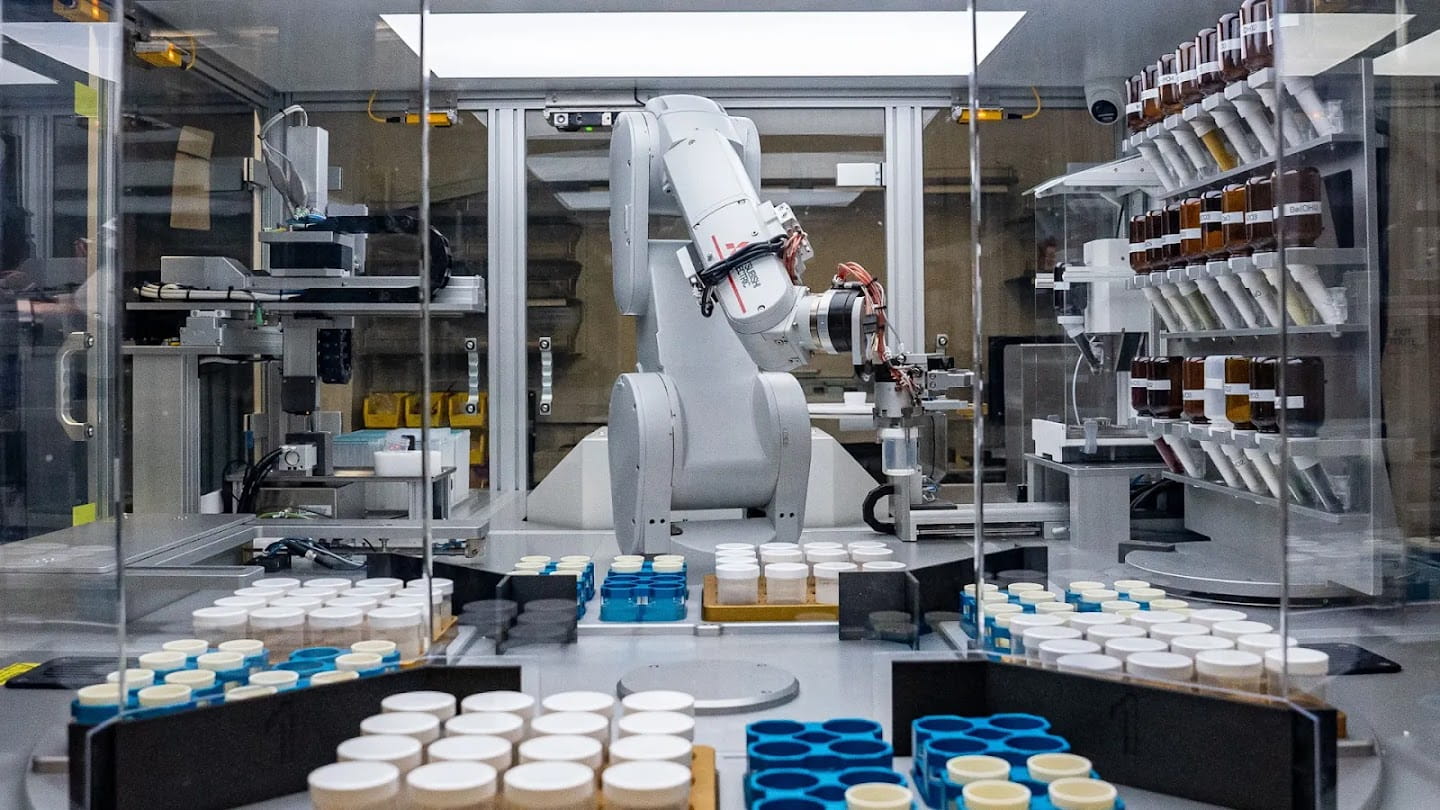
Fig 2. A-Lab at Berkeley Lab, where AI-powered robots discover new materials. Image: Google DeepMind | Photo: Marilyn Sargent/Berkeley Lab
The significance of this approach extends far beyond computational efficiency: it changes the philosophy of materials discovery. Instead of relying on trial-and-error experimentation, researchers can begin with the desired application and allow artificial intelligence to propose candidate materials that satisfy those requirements.
Experimental validation remains the most important test of any AI-generated material. To demonstrate MatterGen’s practical capabilities, Microsoft Research collaborated with the Shenzhen Institute of Advanced Technology to synthesize one AI-designed material, TaCr₂O₆, which had been generated with a target bulk modulus of approximately 200 GPa. Laboratory measurements yielded a value of approximately 169 GPa — within about 20 % of the design target, a level of agreement considered strong for this property. Although a single demonstration does not prove that AI can solve every materials challenge, it provides compelling evidence that generative AI can bridge the gap between digital materials design and real-world synthesis. Microsoft has also released MatterGen and its companion machine-learning simulation framework, MatterSim, as open-source software, enabling researchers worldwide to explore generative materials discovery.
From AI Models to Autonomous Laboratories
Artificial intelligence alone cannot discover new materials. Every computational prediction must ultimately be synthesized, characterized, and experimentally verified before it becomes scientific knowledge. This realization has given rise to one of the most exciting developments in modern materials science: the emergence of autonomous, or self-driving, laboratories.
Traditional laboratory research is highly iterative. Researchers design an experiment, synthesize a sample, characterize its structure and properties, analyse the results, and decide what experiment to perform next. This process often takes weeks or months. Autonomous laboratories compress this entire workflow into a continuous, AI-guided feedback loop.
Machine learning algorithms first analyse existing experimental and computational data to identify the most promising candidate materials. Robotic systems then automatically prepare samples using techniques such as thin-film deposition, solution synthesis, or solid-state reactions. Automated characterization instruments — including X-ray diffraction, electron microscopy, Raman spectroscopy, and electrical transport measurements — immediately analyse the synthesized materials. The experimental results are fed back into the AI models, which update their predictions and recommend the next experiment. This closed loop can run continuously with minimal human intervention, dramatically accelerating the pace of discovery.
Fig2.. The autonomous AI laboratory. Artificial intelligence serves as the central decision-making system, analysing previous experimental results and selecting the most informative next experiment. Robotic platforms synthesize candidate materials, while automated characterization techniques evaluate crystal structure, composition, and functional properties. Newly acquired data are immediately incorporated into the machine-learning models, continuously refining future predictions. The workflow — AI → synthesis → characterization → learning → improved prediction represents a fundamental departure from conventional trial-and-error experimentation.
Minimize image
Edit image
Delete image
Fig 2. MatterGen diffusion model for generating novel, stable materials with targeted chemistry, crystal symmetry, and properties. Image credit: Microsoft MatterGen.
Projects such as Berkeley Lab’s A-Lab which, as noted above, synthesized 41 of 58 AI-proposed target compounds in 17 days together with emerging autonomous research facilities in Europe and Asia, demonstrate how AI, robotics, and advanced instrumentation can accelerate materials discovery while reducing experimental cost and improving reproducibility.
The integration of generative models such as MatterGen with autonomous laboratories points toward a future in which scientists increasingly collaborate with intelligent computational systems. Rather than replacing human creativity, AI augments it by exploring enormous chemical spaces and proposing novel hypotheses, allowing researchers to focus on interpreting results, understanding the underlying physics, and translating discoveries into real-world technologies.
AI in Microscopy and Materials Characterization
Discovering a new material is only the first step. Before it can be used in any practical application, researchers must confirm that the synthesized material matches the predicted crystal structure and possesses the desired physical properties. This is where materials characterization becomes indispensable.
Modern characterization techniques, including SEM, TEM, scanning transmission electron microscopy (STEM), AFM, XRD, Raman spectroscopy, XPS, electron backscatter diffraction (EBSD), and EDS generate enormous volumes of data. A single high-resolution TEM session may produce thousands of images, each containing atomic-scale information about crystal defects, interfaces, grain boundaries, or dislocations. Synchrotron XRD or hyperspectral Raman mapping experiments can produce terabytes of multidimensional data that are impractical to analyse manually.
Artificial intelligence is transforming this stage of the research workflow through computer vision and deep learning. Convolutional neural networks trained on expertly labelled electron microscopy images can automatically identify nanoparticles, measure particle-size distributions, detect grain boundaries, classify crystal defects such as vacancies, dislocations, and stacking faults, segment phases, and even assist in reconstructing three-dimensional atomic arrangements. Because these structural imperfections strongly influence electrical conductivity, catalytic activity, magnetic behaviour, and mechanical strength, automated defect identification helps researchers establish structure–property relationships far more efficiently while improving consistency by reducing subjective interpretation.
AI is also reshaping X-ray diffraction analysis. Traditional peak identification and Rietveld refinement require significant expertise and become challenging for multiphase or poorly crystalline nanostructures. Machine-learning models can rapidly classify diffraction patterns, identify crystal phases, estimate lattice parameters, and suggest plausible crystal structures. Expert validation remains essential, but AI substantially reduces the time required for routine analysis.
The next frontier is agentic microscopy, in which AI is integrated directly into advanced electron microscopes. Instead of passively collecting images, the AI actively decides where to image next, identifies regions of scientific interest, adjusts imaging conditions in real time, and connects observations with materials databases. This transforms microscopy from a passive imaging technique into an intelligent discovery platform an essential capability for nanotechnology, where atomic-scale defects often determine device performance.
Artificial Intelligence in Semiconductor Manufacturing
The semiconductor industry has always operated at the frontier of nanotechnology. Modern integrated circuits contain billions of transistors with critical dimensions of only a few nanometres, where even a single nanoscale defect can degrade device performance or cause manufacturing failure.
Artificial intelligence is now deeply embedded throughout semiconductor fabrication. Machine learning models monitor wafer production in real time, detecting subtle process variations before they become critical. Computer vision systems inspect wafers at nanometre resolution, identifying contamination, lithography errors, pattern distortions, and surface defects that would be extremely difficult to detect manually. Predictive-maintenance algorithms analyse sensor data from fabrication equipment to anticipate failures before they interrupt production, reducing downtime and improving manufacturing efficiency.
Leading companies such as TSMC, Intel, Samsung Electronics, ASML, NVIDIA, and IBM increasingly employ AI for lithography optimization, process control, defect detection, yield prediction, and chip design automation. Extreme ultraviolet (EUV) lithography is one of the most sophisticated manufacturing technologies ever developed, benefits significantly from AI-assisted optimization of exposure conditions and defect correction. As transistor dimensions continue to approach atomic scales, AI will become even more critical for maintaining manufacturing precision and scalability.
AI in Nanomedicine and Healthcare
The convergence of nanotechnology and artificial intelligence is creating entirely new opportunities in medicine. Nanoparticles are widely investigated for targeted drug delivery, cancer therapy, molecular imaging, vaccine delivery, biosensing, tissue engineering, and regenerative medicine. Designing effective biomedical nanoparticles, however, is exceptionally challenging because their performance depends on numerous interconnected variables, including size, shape, surface chemistry, charge, biodegradability, toxicity, circulation time, and interactions with biological tissues.
Machine learning enables researchers to optimize these variables simultaneously. Rather than experimentally evaluating thousands of nanoparticle formulations, AI models can estimate drug-loading efficiency, optimize surface functionalization, predict cellular uptake, evaluate toxicity, and identify promising nanocarriers before expensive laboratory experiments begin.
The lipid nanoparticle systems used in mRNA vaccines during the COVID-19 pandemic highlighted the enormous potential of nanomedicine, and computational methods played a growing role in optimizing such formulations and their delivery efficiency. Similar AI-driven strategies are now being applied to cancer therapeutics, gene-editing delivery, protein delivery systems, and personalized medicine. Beyond pharmaceuticals, AI-assisted nanotechnology is advancing wearable biosensors, implantable medical devices, point-of-care diagnostics, and intelligent health-monitoring systems capable of continuously analysing physiological data technologies that may enable earlier disease detection and more personalized treatment.
Industrial Applications of AI-Driven Nanotechnology
The impact of AI-assisted nanotechnology extends far beyond academic research laboratories.
In energy storage, AI is accelerating the discovery of advanced battery materials, solid electrolytes, sodium-ion battery chemistries, hydrogen-storage compounds, fuel-cell catalysts, and thermoelectric materials. In renewable energy, machine learning is helping to optimize perovskite solar cells, photocatalysts for water splitting and hydrogen production, and catalysts for carbon dioxide reduction that may contribute to sustainable energy production.
In electronics, AI supports the development of two-dimensional materials, quantum dots, spintronic materials, flexible electronic devices, and quantum computing platforms. The aerospace and automotive industries employ AI to develop lightweight nanocomposites, corrosion-resistant coatings, thermal-management systems, and advanced structural materials that improve fuel efficiency while reducing environmental impact.
Environmental technologies also benefit significantly: researchers are designing nanomaterials for water purification, air filtration, pollutant detection and degradation, carbon capture, and environmental remediation. These examples demonstrate that AI is not simply accelerating scientific research, it is shortening the pathway between laboratory discovery and real-world technological innovation, while reducing development costs and enabling more sustainable technologies.
Challenges and Ethical Considerations
Despite its remarkable capabilities, artificial intelligence is not a substitute for scientific understanding.
One of the greatest challenges is data quality. Machine learning models can only be as reliable as the datasets used for training. Experimental uncertainties, inconsistencies between density functional theory calculations, and incomplete databases can introduce systematic errors that reduce predictive accuracy.
Another important limitation is generalization. Models trained primarily on well-ordered crystalline materials often perform poorly when applied to disordered systems, amorphous materials, interfaces, grain boundaries, or highly defective nanostructures — precisely the systems most frequently encountered in practical nanotechnology.
Interpretability remains an active area of research. Many deep learning models function as “black boxes”, producing accurate predictions without clear physical explanations. Scientists must therefore combine AI predictions with established theories in condensed-matter physics, solid-state chemistry, and quantum mechanics.
Ethical considerations are equally important. Scientific discoveries must remain reproducible, transparent, and experimentally validated, and data should be shared responsibly. AI should complement not replace human scientific expertise. Rather than viewing AI as an autonomous scientist, it is more appropriate to consider it an exceptionally powerful research assistant: one capable of accelerating, but not replacing, the scientific method.
Looking Ahead: The Future of AI-Driven Nanotechnology (2030–2040)
The next decade is likely to bring even deeper integration between artificial intelligence and nanotechnology.
Researchers are already developing foundation models for materials science capable of performing multiple tasks within a unified framework property prediction, crystal generation, atomistic simulation, and experimental planning. Combined with advances in quantum computing and high-performance computing, such systems could dramatically accelerate the discovery of superconductors with higher critical temperatures, catalysts for efficient hydrogen production, quantum materials for next-generation electronics, and sustainable materials that reduce reliance on critical raw elements.
Autonomous laboratories are expected to become increasingly sophisticated. Rather than operating as individual instruments, future research facilities may consist of interconnected robotic platforms that synthesize, characterize, analyse, and optimize materials continuously in fully closed-loop discovery systems. The convergence of AI, quantum computing, digital twins, autonomous robotics, and advanced microscopy could dramatically reduce the time required to move from a scientific idea to a functional technology.
Human scientists, however, will remain central to the discovery process. AI excels at recognizing patterns and exploring enormous chemical spaces, but creativity, scientific intuition, theoretical reasoning, and experimental validation continue to depend on human expertise. The future of nanotechnology will therefore not be driven by artificial intelligence alone it will emerge from close collaboration between researchers, intelligent algorithms, robotics, advanced computation, and experimental science.
Although many challenges remain, the direction is clear: materials science is shifting from discovering materials by chance toward designing materials by intention.
Key Insights
• Artificial intelligence is transforming every stage of nanotechnology research accelerating materials discovery, optimization, characterization, and industrial manufacturing.
• Machine learning complements first-principles methods such as density functional theory rather than replacing them.
• Landmark breakthroughs, including GNoME and MatterGen, demonstrate AI’s ability to discover and design entirely new materials that can be experimentally validated.
• Self-driving laboratories integrate AI, robotics, synthesis, and characterization into continuous closed-loop discovery pipelines.
• AI is improving electron microscopy, spectroscopy, diffraction analysis, semiconductor manufacturing, nanomedicine, and sustainable materials development.
• Open databases such as the Materials Project, OQMD, AFLOW, NOMAD, Alexandria, and the Open Catalyst Project provide the data foundation for modern AI-driven materials research.
• Human expertise remains essential for interpreting results, validating discoveries, and developing new scientific theories.
• Future breakthroughs will arise from the collaboration between scientists, artificial intelligence, quantum simulation, robotics, and experimental innovation.
Join the Discussion
What do you think will be the next breakthrough in AI-driven nanotechnology? Will it be room-temperature superconductors, self-driving laboratories, AI-designed quantum materials, or entirely new nanomaterials that we have not yet imagined?
Share your perspective in the comments. I would be interested to hear how you see AI shaping the future of materials science and nanotechnology over the next decade.
References
Merchant, A., Batzner, S., Schoenholz, S. S., Aykol, M., Cheon, G. & Cubuk, E. D. Scaling deep learning for materials discovery. Nature 624, 80–85 (2023). https://doi.org/10.1038/s41586-023-06735-9
3. Szymanski, N. J., Rendy, B., Fei, Y., et al. An autonomous laboratory for the accelerated synthesis of novel materials. Nature 624, 86–91 (2023). https://doi.org/10.1038/s41586-023-06734-w
4. Butler, K. T., Davies, D. W., Cartwright, H., Isayev, O. & Walsh, A. Machine learning for molecular and materials science. Nature 559, 547–555 (2018). https://doi.org/10.1038/s41586-018-0337-2
5. Xie, T. & Grossman, J. C. Crystal graph convolutional neural networks for an accurate and interpretable prediction of material properties. Physical Review Letters 120, 145301 (2018). https://doi.org/10.1103/PhysRevLett.120.145301
6. Chen, C., Ye, W., Zuo, Y., Zheng, C. & Ong, S. P. Graph networks as a universal machine learning framework for molecules and crystals. Chemistry of Materials 31, 3564–3572 (2019). https://doi.org/10.1021/acs.chemmater.9b01294
7. Deng, B., Zhong, P., Jun, K., et al. CHGNet as a pretrained universal neural network potential for charge-informed atomistic modelling. Nature Machine Intelligence 5, 1031–1041 (2023). https://doi.org/10.1038/s42256-023-00716-3
8. Jain, A., Ong, S. P., Hautier, G., et al. Commentary: The Materials Project: A materials genome approach to accelerating materials innovation. APL Materials 1, 011002 (2013). https://doi.org/10.1063/1.4812323
NanoHelp.eu connects the global nanotechnology community with conferences, funding, jobs, and research resources. Our mission is to accelerate innovation by bridging academia, industry, and policy in nanoscience.